
Resonance Ring

A physiological synchrony ring to solve the invisible disconnection people feel from themselves and each other.

You're both home and present but neither of you is actually there.
This is what disconnection actually looks like.
That one coworker who wrecks your whole afternoon.
You don’t know why, but your body sure does.
Loneliness is a public health crisis.
Not because people are alone. Because they’re out of sync.
You’ve felt it. You just couldn’t prove it.
A fancy name for something you already experience: your nervous system reacting to someone else’s.
We just built the thing that finally lets you read it.
Interoception
Feeling your own body — now extended to the person next to you
Thermoception
Temperature as a closeness signal (wild, but it works)
Social presence
That felt sense of another person being really there — turned up
Chronoception
Two people falling into the same rhythm without trying
THE SCIENCE
– Heart rate variability actually mirrors between people who connect
– Breathing syncs up, even when you’re not trying
– Skin conductance spikes happen together, not just solo
– Documented in couples, close friendships, and great teams
– The biology is real. It just never had an interface before

Two tiers. One need
“Why do I feel weird after that conversation?” “Why did that date feel so right?” — finally, an answer.


No need to look at your phone during the actual moment.
A smart ring and companion app that measures physiological synchrony — between you and your own nervous system, and between you and the people who matter most to you.
The wearable
The app
A slim, skin-toned ring. Boring on purpose. Talks to paired device directly.
Allows you to lock in while you’re in the moment, with real time data accessible later.
WHAT YOU FEEL ON YOUR FINGER
– Slow, steady warmth
– Cool, irregular drift
– Synchronized pulse
– Voluntary ping
Today’s summary: One sentence. Not a dashboard, not a grade.
Connection map: Interaction breakdowns showing where you were in sync and where you weren’t.
Pattern insights: After 30 days, which people actually restore you vs. quietly cost you.
One Product, Three Uses
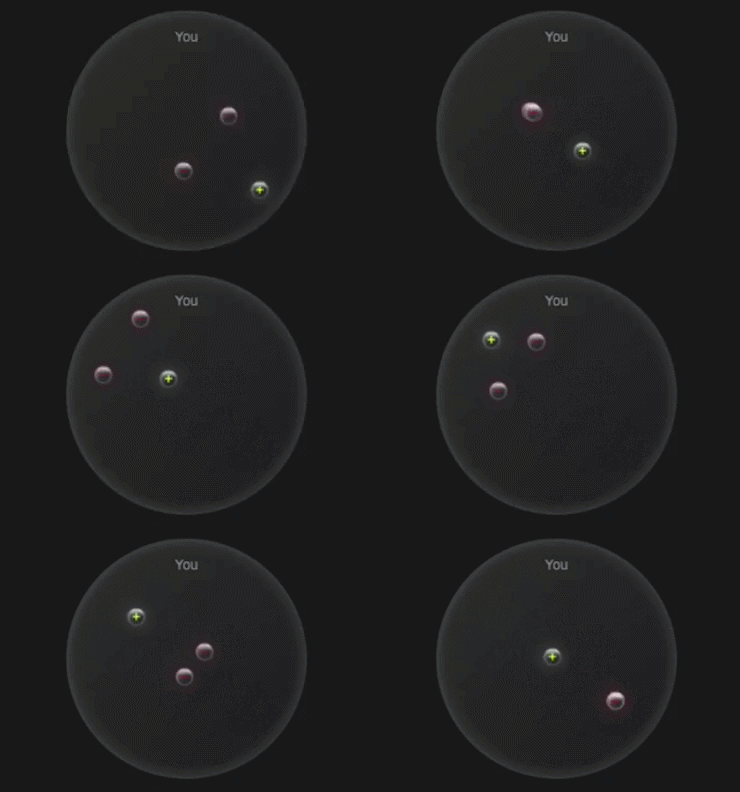
You, 30 – Solo Mode
Resonance measures all of your biometrics and interactions that impact your scoring to give you insight on stressors like your coworker ignoring your emails and the anxiety of awaiting test results, and how taking a walk can relieve some of those tensions.
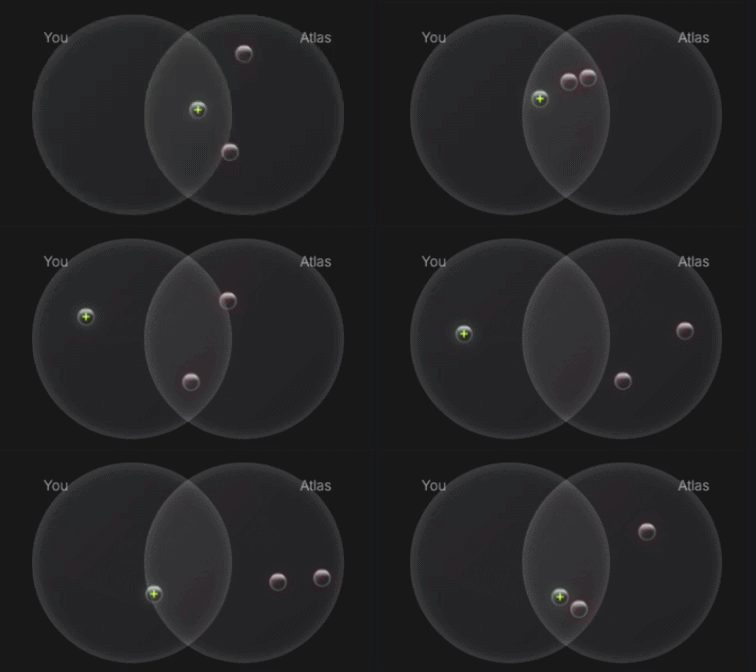
You and Atlas — Paired Mode (Romantic)
Are you and your partner able to realign after conflicts? What is your emotional capacity for disagreements and moments where you two drift? Use your resonance scores to create a plan to improve your bond.
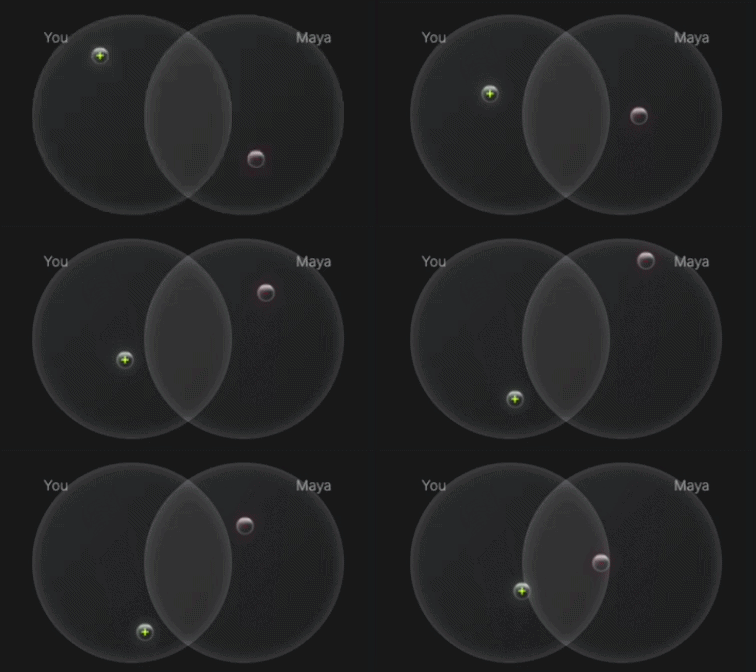
You and Maya — Paired Mode (Friendship)
Weeks of drifting, you’re unsure why. Resonance shows you’re leaving the interactions more activated than Maya. You are slowly drifting due to Maya being less invested in conversations. Use the metrics to initiate a way to see eye to eye.


We thought about all the ways this could go wrong.
You have to be there to pair
Both people physically present, doing a shared gesture at the same time. No remote pairing. No adding someone without their knowledge. Unpairing is instant.
There’s no “their score”
You can't isolate your partner's state. You only ever see the shared field. The app's language is built around this — it will never say "they were disengaged." Only "you were out of sync."
Low sync ≠ bad relationship
Resonance is not a verdict. It's a mirror. If users start checking obsessively, the app gently notices: "the band does better when you let it run quietly."
Your body data stays on your body
HRV, skin conductance, temperature — processed on-device, full stop. What's shared is the resonance score. A number that belongs to the relationship, not either person.
We watched for the controlling partner scenario
Both people physically present, doing a shared gesture at the same time. No remote pairing. No adding someone without their knowledge. Unpairing is instant.
Actual emergencies are handled
Acute distress patterns trigger a private alert and one-tap access to your pre-set emergency contacts — always separate from any paired or group connection.
What the ring actually reads


Next Steps
Collective mode
Teams, classrooms, therapy contexts. We've scoped the biometrics and the UX — Collective Mode is the natural next tier. It's on the roadmap.
Other accessory types
Wristbands, necklace, etc.

Figma View
Prototype
The Resonance prototype is a detailed concept that combines a discreet smart ring with a companion mobile app to make hidden body responses in relationships easier to understand. In Figma, we designed the ring’s main feedback states: slow steady warmth for feeling in sync, cool uneven shifts for feeling off, and a gentle pulse or tap to signal presence. The app avoids cluttered dashboards and instead offers one clear daily sentence, a simple map of your key interactions, and longer term patterns over several weeks. Behind this, the prototype shows how four main signals from the body are combined into a single “resonance” score and timeline that highlight moments of drift and moments of alignment. Story based screens for solo use, romantic partners, and friendships illustrate how people might use these insights in situations like draining workdays, conflict, or slow emotional distance.
Congrats, you made it to the end! If you’re craving more excitement, just scroll your way back to the top and try a different page because this one is officially out of content.