
Space Exploration in the current world
- Tarun Suresh
- Oct 5, 2020
- 4 min read

Updated: Oct 6, 2020
Space exploration is a topic that is either a hit or miss. Most of the people who are into it are either really into it or they don't bother about it. As for me, I have a really strong interest in space exploration.

The main reason I have a huge interest in space is because of the fact that understanding the cosmos basically helps us understand ourselves. We always hear, "we're made of something special", but the truth is, we are made up of Carbon, Oxygen and Nitrogen and can you guess what the three most commonly occurring elements in the universe is, you guessed it, Carbon, Oxygen and Nitrogen.
I feel like a lot of people are getting into space exploration because of its impact in movies like

Martian, Interstellar, 2001: A Space Odyssey and many others. The onset of movies that explain the universe with a certain amount of accuracy because of them consulting with astronauts and astrophysicists helped bridge a gap that had formed between what was presented on screen and what was factually correct.
Present Scenario
Nowadays with the onset of social media, there is an even larger platform for publicizing anything that wanted to be publicized. We all know someone who has created a very large social media following in the past few years, the Tony Stark of our generation, Elon Musk. He is someone who is undeniably himself and has muscled his way into the forefront of space exploration. Before him it was the main government bodies, like NASA of the USA, Roscosmos of Russia previously known as USSR and ISRO of India, that were in the forefront of space exploration. Nowadays we are seeing private companies like SpaceX, Blue Origin
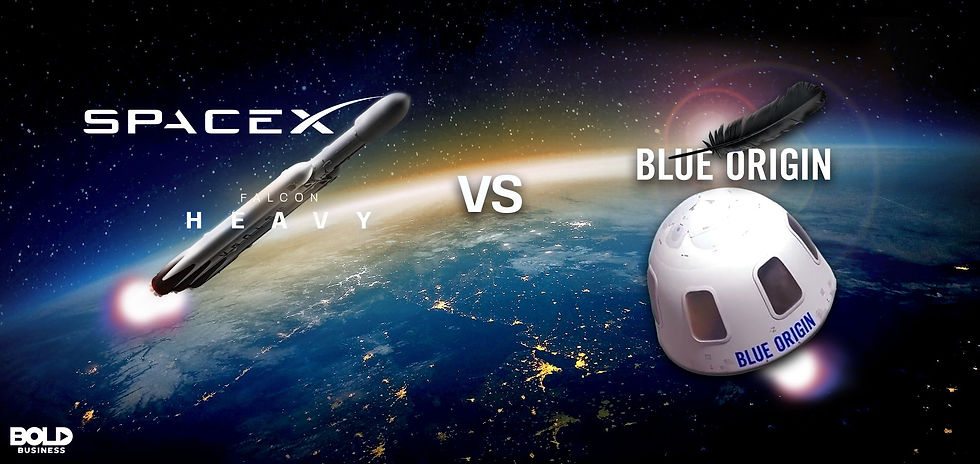
making its mark on the aerospace scene lead by two of the richest people in the globe currently. Elon Musk has one main dream, and that is to die on mars. Every decision he makes in SpaceX has only one precedent, "Will it get us to Mars quicker or not?"
We have released a large number of satellites throughout our space age and a lot of them have aided our study of the universe. There are a few special satellites that I'm very fond of and they are the Voyager satellites and the Kepler series.

The voyager series was the first satellite to give us detailed images of the planets of our solar system. It required incredible precision and countless hours to figure out the trajectory to be able to fly by most of the planets. Another interesting aspect of the Voyager satellites was the fact that they were the first satellites that were going to be venturing into deep space. They gave us an idea of the planetary system we belong to and helped prove a lot of theories about various other planets. As you are reading this, the voyager satellites move further and further away from us venturing into areas of space we do not have much idea about. I'm hoping that some peaceful aliens find the record and come share their knowledge of the universe, but that is just a childish dream, isn't it? ISN'T IT!?
It is.

This prompted NASA scientists to place a golden record in the space craft that gave out details of human beings and also the location of our planet in the cosmos. NASA received a lot of backlash because, in a way, they were accepting the presence of aliens. They further explained that they cannot be sure they do exist but neither can they be sure of the opposite.

The Kepler telescope has been named as such to commemorate the German astronomer, mathematician, and astrologer, Johannes Kepler. He was a key figure in the 17th-century scientific revolution, best known for his laws of planetary motion, and his books. The Kepler telescope is really interesting because it focuses on locating potentially habitable planets in the universe. The selection is very difficult because there are a lot of factors that affect the ability of a planet to habit life. The distance to a star has to be very specific so as to maintain an ideal temperature on the surface. This particular zone where a habitable planet may reside is called the 'Goldilocks' zone. During 9.6 years in orbit, Kepler led to the discovery of more than 2,600 planets by observing more than
half a million stars.
Future of Aerospace
The first step in the future of Aerospace exploration is visiting the closest celestial body, our very own personal natural satellite, the moon. Its been 48 years since the last manned mission (Apollo 17) left the earth to go to the moon. and we are gonna have to wait another 4 years for the planned mission, the 'Artemis' project to create history by taking the first woman to the moon. In the same timeline, SpaceX and Blue Origin are looking at Mars. The purpose of the mission is to colonize mars and make the homo sapiens a multi-planetary species. This concept was just a fantasy at some point and now there are people who spend day in day out in trying to make this dream a reality.

Imagine waking up one day to a completely different world, where everything is new and we live in an artificial biome and are allowed only a certain amount of time to go wandering outside to see what lies beyond the horizon. Here's to hoping that Elon and Jeff succeed in their endeavors and we get to see mars in person in our lifetime. Maybe aliens will teach us how to survive in the difficult conditions of space, but again, that's a childish dream, but is it?


Comments